Mapping Human Rights Lawyers
- Date
- 2 February 2026
- Time
- 15:30 -17:00
- Location
- Roeterseilandcampus - building A
- Room
- A3.01
Abstract
Few would disagree that representation before the European Court of Human Rights (ECHR or “The Court”) is key to a successful application. Yet, the lawyers acting before the Court have been all but ignored by the literature. The gap is noteworthy. International legal scholarship has paid considerable attention to the professionals working in and before other international courts and tribunals which could be deemed, at least in terms of raw metrics, less prominent and not nearly as successful. Moreover, the crucial role of lawyers in the making of legal orders and regimes has been acknowledged in legal and IR literature. In a new study, Niccolò Ridi and I draw on a very large dataset comprising all Chamber and Grand Chamber judgments between 2005 and 2022 to carry out the first in-depth study of the lawyers acting and appearing before the Court, principally (but not exclusively) focusing on those representing the applicants. We provide the first description of the “ECHR bar”, looking at those lawyers who have frequently acted before the Court, their connections and pathways to specialization, as well as the implications of being a ‘repeat player’ and the evolution of strategies and reactions throughout the history of the Court and the milestones marking a shift in its role.
Biography
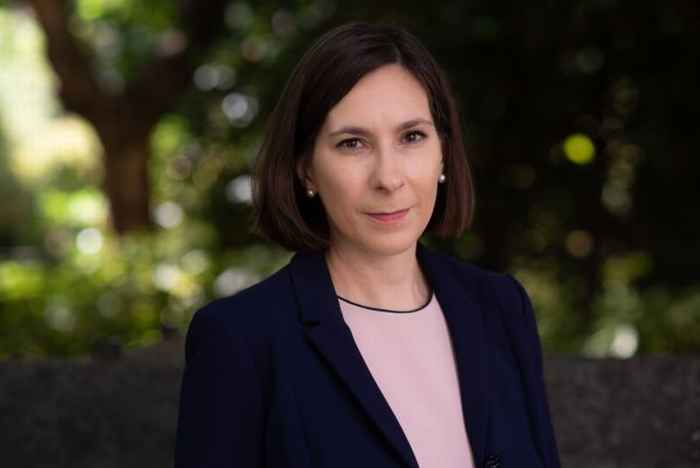
The research interests of Professor Fikfak are in the fields of international law, human rights, and public law. She specialises in the functioning of the European Court of Human Rights, with specific attention on access to human rights justice, and the implications of automation in this context.
She serves as the Vice President of the European Society of International Law and also acts as judge ad hoc at the European Court of Human Rights. Veronika employs big data analysis in her work, informed by psychology and behavioural economics. She has received more than 5 million euros in funding from the European Research Council, UK’s ESRC Future Research Leaders Grant, the British Academy, Norway's Research Council, Carlsberg Foundation, and the Humboldt Foundation. She has published widely in top international and human rights journals and has received several prizes, including Best Article Prize from the American Society of International Law (Dispute Resolution Group) in 2024.